
I think there is a profound and enduring beauty in simplicity; in clarity, in efficiency. True simplicity is derived from so much more than just the absence of clutter and ornamentation. It’s about bringing order to complexity.
When Sears opened a new location on the outskirts of Rochester, New York, in 1990, it was one of the largest retailers in the world. Its pioneering idea had been to shift department stores, once the gleaming centerpieces of major cities, to suburban locations, where middle-class customers were increasingly located, and parking was ample.
That same store, long since shuttered, is now undergoing another transformation. It’s the latest in a long line of vacant Sears sites being redeveloped—in this case for retirement housing. It might seem like a fitting metaphor for the fate of traditional brick-and-mortar retail as it faces the ongoing e-commerce onslaught. From a peak of 3,500 locations, after its merger with KMart in 2005, there are just 15 Sears stores left. Many of America’s malls are facing a similar fate. Often, online retailers snap up the empty locations to turn them into fulfillment centers.
Yet shift your focus to Asia and it’s a different story. Physical retail is booming. In China, for instance, major brands are expanding their physical footprint—Starbucks is planning to have up to 9,000 stores in the country by 2025, Lego is opening another 80 in 2023, and China alone accounted for 40 percent of all luxury brand openings in 2022. So what’s different? One answer is that rather than try to compete with online retailers, a new breed of store is taking digital technology and using it to enhance the in-person experience. Take S’Young International, a Chinese beauty brand specialist, which has recently opened a flagship site in Changsha. This innovative space includes AI-powered make-up consultations and tailored recommendations from virtual assistants. Customers can purchase products in the store or use a QR code to buy from online platforms. Other retailers are tapping into the “instant retail” trend—combining online orders with ultra-fast delivery (via “quick commerce” services such as Meituan)—to raise their offline sales.
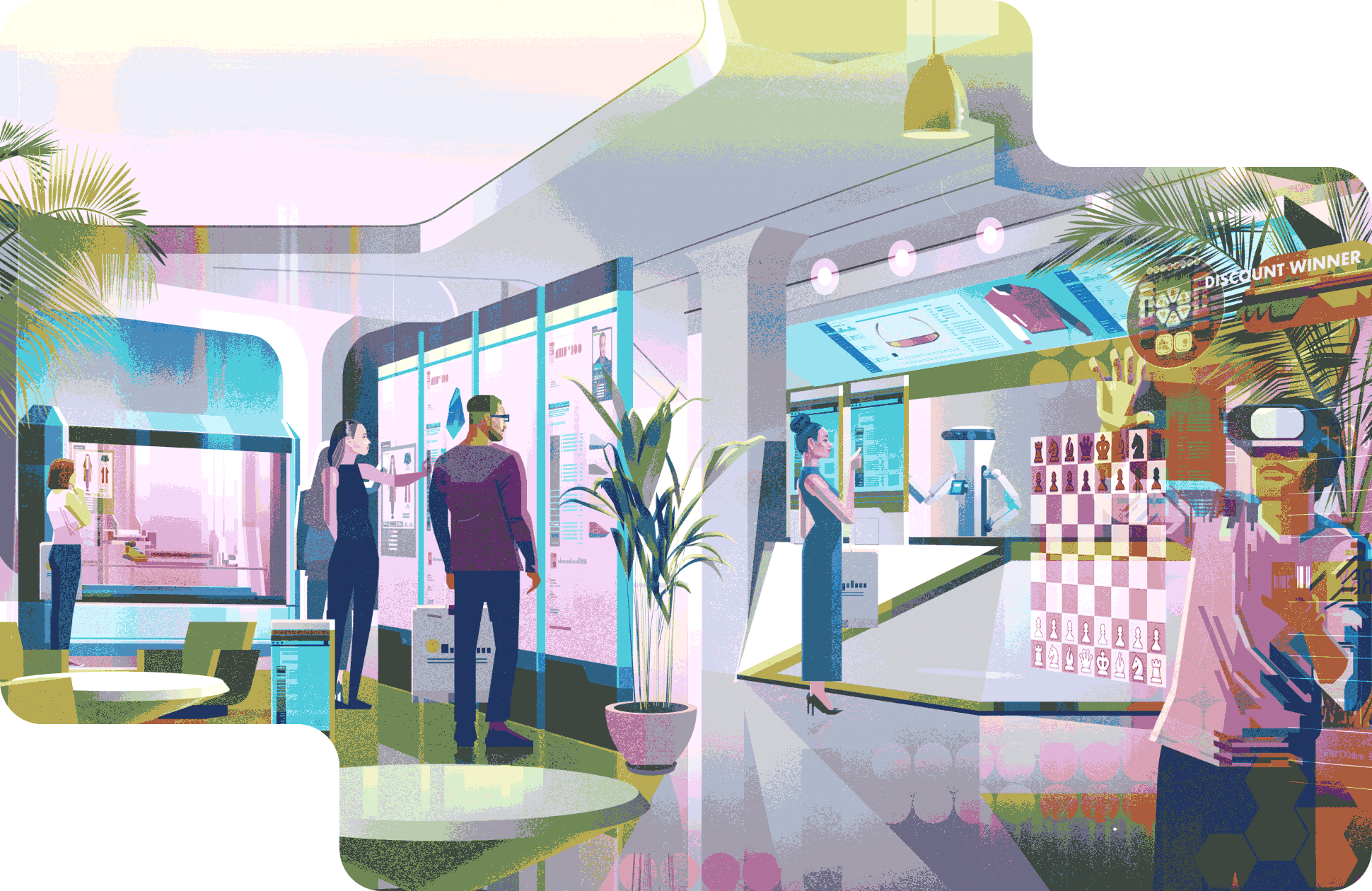
Western brands are also innovating, experimenting with new technologies such as driverless delivery and virtual reality experiences. Far from becoming a distant memory, stores could be set for a new lease of life that blurs the lines between the physical and the digital—a state that marketeers refer to as “phygital”. So what are the emerging trends that could define the future of retail, and what will that mean for payments? Join us for some informed speculation…
Death of the queue
Many shoppers, when faced with a long checkout line, have felt the urge to simply walk out of the store. Now they can, taking what they want without fear of arrest. Drawing on a combination of sensors, cameras, and radio frequency identification (RFID) tags, a store can track the items that customers pick from shelves. When they leave the premises, the goods are automatically charged to their online account. Once considered a novelty, checkout-free stores are predicted to grow globally from 250 in 2021 to 12,000 by 2027.
For stores that don’t wish to do away with checkouts altogether, there are a number of other innovations that instead seek to make the experience faster and more convenient. One is facial recognition systems. Already established in Asia, “smile-to-pay” is growing in the US and Europe and can dramatically reduce wait times. Another approach is for shoppers to use their smartphone. Jie Cheng, Vice President and Global Head of Digital Commerce at snacks company Mondelez International, recalls visiting the FairPrice store in Singapore recently, where customers use their smartphone to scan the barcodes of products as they put them in their basket, redeem loyalty points and then pay directly on their phone. They only need to verify their digital receipts with the large scanner screen right before they leave the premises. “So the whole transaction is happening on their mobile app while the person is in the store,” she says. “It is really a very integrated, blended experience. I believe Sam’s Club in the US also uses similar ‘scan and go’ technology in their stores. It’s certainly become more common now.”
Whatever the technology, the goal is to improve the last step of the shopping process. “Having a more fluid checkout is so important, whether it’s paying by tapping your watch to a store associate’s phone, or smiling at a camera at the checkout area,” says Lucia Li, who leads Advisory for the Consumer Goods and Retail team at J.P. Morgan Payments. “Online retailers know if you make it difficult to pay, you lose the sale. Brick-and-mortar are catching on and are looking for ways to reduce friction for consumers to complete that final step in the customer journey.”
Read the rest of the article Here.
Category: Tech
Go back to our work